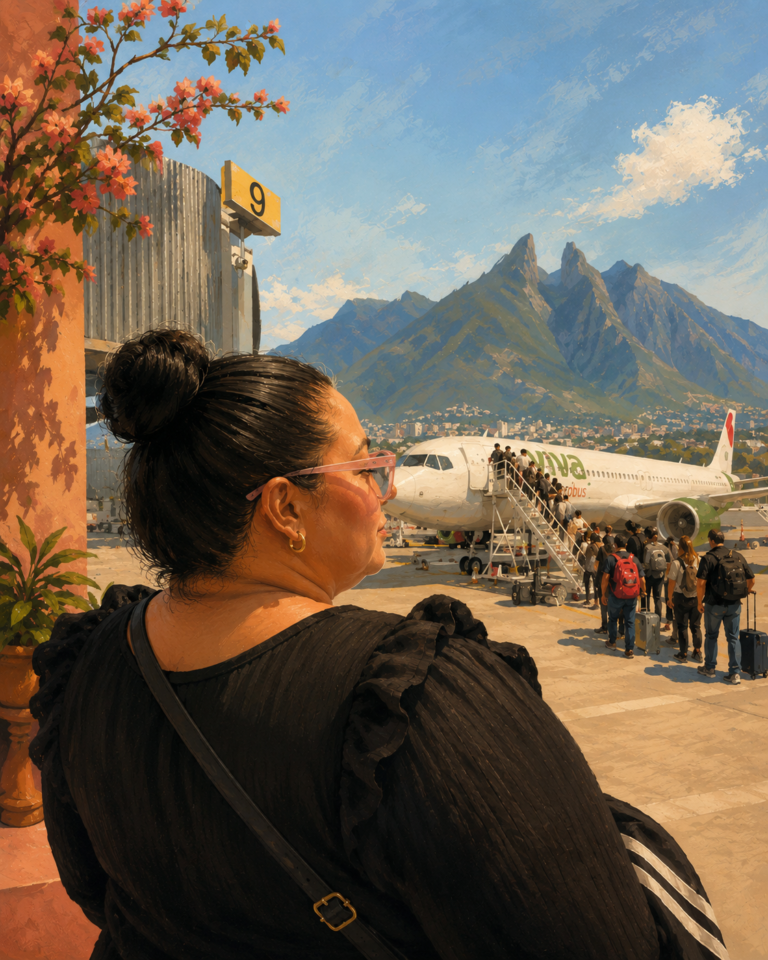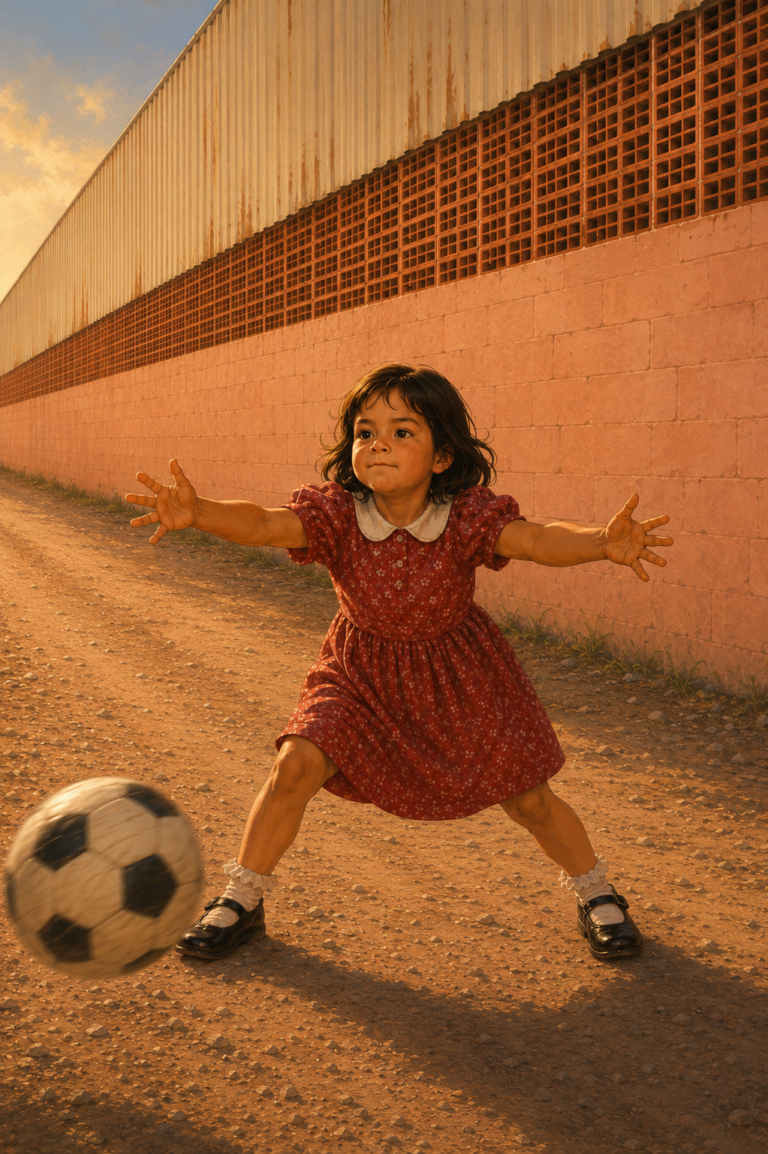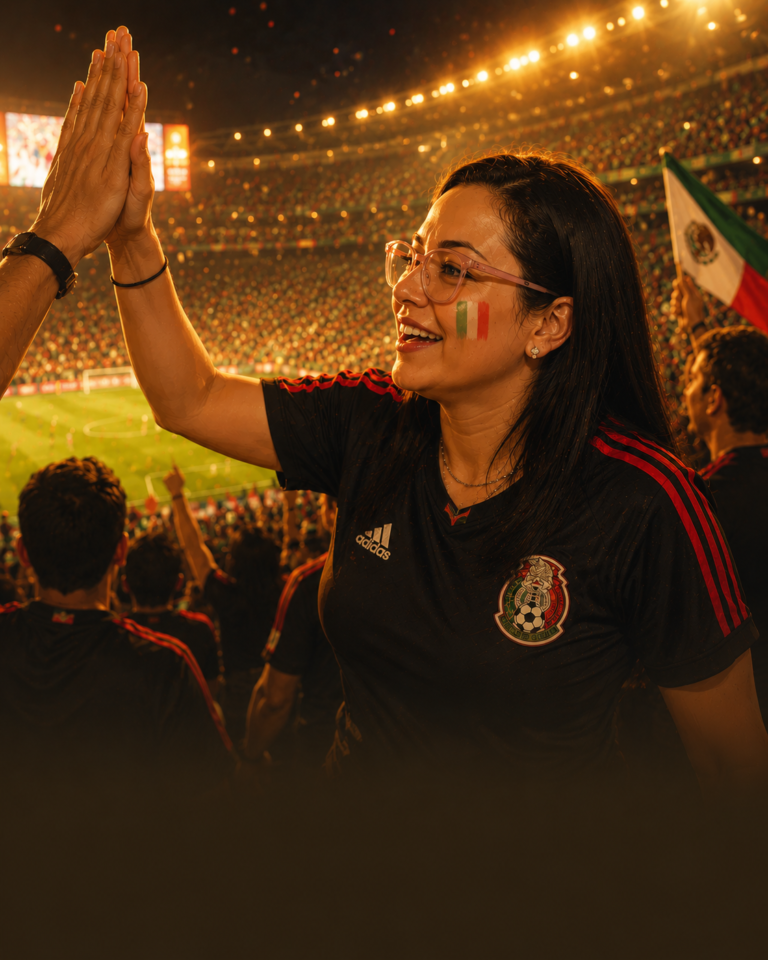

There is a cost to staying quiet when waving the flag isn’t enough, and performative support isn’t the same as standing with someone. So often we use our privilege for a popular sport instead of the issues that actually affect people in our community, day to day. Then there are the ones who do it right, Cristela Alonzo speaking out in her shows and on social media and turning ticket sales into fundraisers for immigrant legal defense, Becky G saying the fear of losing followers is nothing next to the fear her own community lives with.
We Were Existing
I was probably six years old the first time I remember immigration stopping our car. My sister was already born by then. They had likely stopped us before that too, I just wasn’t old enough yet to hold onto it. There wasn’t a word for performative support back then. Something about that stop just felt different from everything else on the road.
I think about that car a lot lately, watching what performative support actually looks like during a World Cup that’s still playing out right now, partly on this side of the same border.
We drove eight hours, somewhere on the road between Houston and La Concordia, Nuevo Laredo. We went all the time to see Mama Lidia, my great-grandmother. No occasion needed. That’s just what you did when the people you love live on the other side of la frontera, the border.
I don’t remember being scared.
I remember thinking it was just what happened on that road. That this was normal. That this was just part of the trip, like stopping for gas, eating at the Dairy Queen in Freer, or sometimes taking three or more hours to cross el Puente Numero Uno, Bridge One, while vendedores, street vendors working the line of cars, sold candy through the windows.
Nobody told me it wasn’t like that for everyone.
I was six. I just thought that’s how roads worked.
It wasn’t until my late twenties, maybe early thirties, that I finally understood. That stop wasn’t routine. It wasn’t procedure. It wasn’t universal.
It was a filter.
And my family kept getting caught in it. Not because we were doing anything wrong. Because we were existing on a road that some people get to drive without being questioned.
How Mexico Welcomed The World
I thought about that little girl in the backseat last week when I watched the World Cup open at the stadium that was renamed Estadio Banorte. I’ll still call it Estadio Azteca, because that’s what it is.
Mexico welcomed the world with mariachis in full charro suits. Traditional dancers. Marimba players. Shakira on a stage the size of a dream. Alejandro Fernández singing the national anthem like he was singing it directly to every Mexican who ever had to prove they belonged somewhere.
“People of the world,” they said. “Welcome to Mexico.”
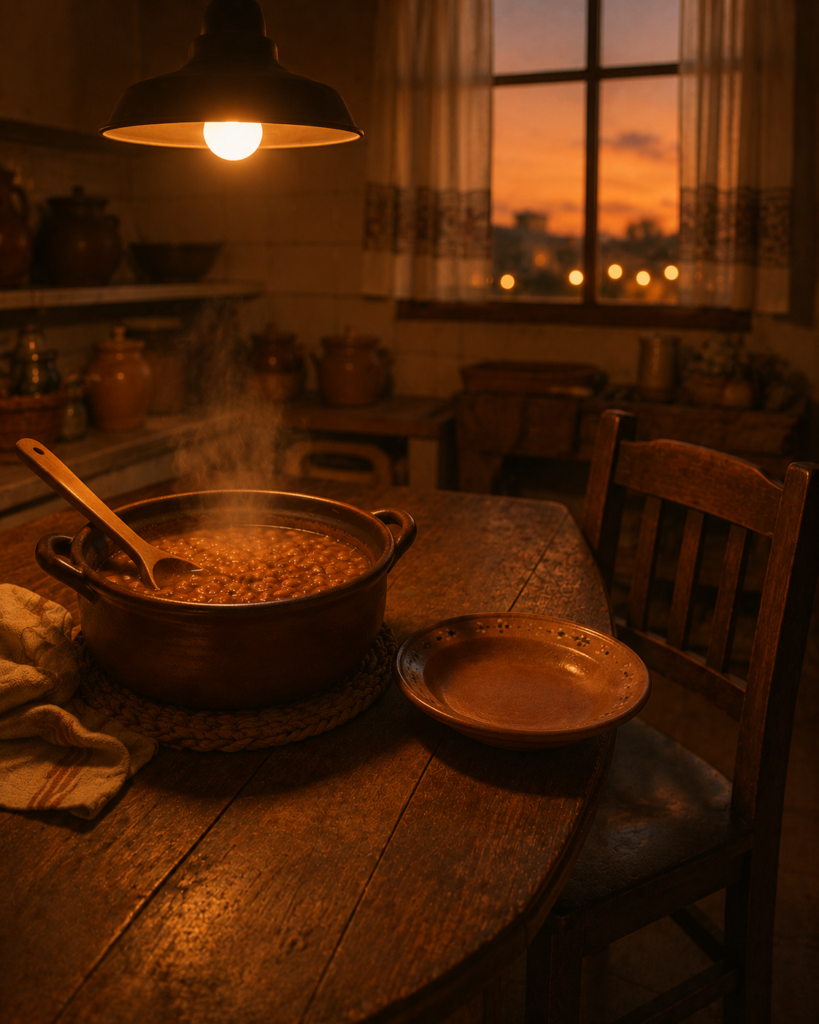
And I cried. Because I knew what welcome actually looked like. I had seen it my whole life in the way my family opened a door, set an extra plate, made room at the table even when the table was small. Se le echa más agua a los frijoles, we always say, you just add more water to the beans. There is always room for one more.
The Fight For Our Own Language
A few days into the tournament, FIFA moderators stopped a Mexican journalist from asking a question in Spanish at a press conference, in a tournament being co-hosted by a Spanish speaking country.
It pisses me off that we even had to fight for that. This match was played in Mexico City. In Mexico. Where Spanish is the language nearly everyone speaks, the language of public life. Spanish speaking teams are on that field. Millions of us in these stands and on these couches speak Spanish. And we still had to raise hell just to be allowed to speak it out loud at a press conference, in the host country, in the language of the host country. That’s not an oversight. That’s ignorance wearing a lanyard. That’s colonizer mentality with a press badge.
It wasn’t an isolated incident either. Achraf Hakimi tried to answer a question in Spanish and got shut down on the spot, officials citing a lack of translation. Other players ran into the same wall in the days that followed.
The clip of Hakimi getting stopped mid sentence went viral. Not him answering. Him being shut down. That’s what people couldn’t stomach. The backlash spread fast and loud, and within days FIFA reversed the policy.
Our outrage did that. A player getting silenced on camera did that.
How The US Welcomed The World
It wasn’t really about one press conference, or even one country. It was about who gets to decide whose presence is valid and whose is suspect. Mexico’s government decided with mariachis. US policy, agency by agency, decided differently.
Somalia’s first ever World Cup referee, a man who had already been vetted by FIFA, was denied entry at Miami and put on a plane back home.
Iraq’s striker Aymen Hussein was detained for nearly seven hours at O’Hare. His team’s photographer was held for more than ten hours and denied entry altogether.
Iran couldn’t safely set up their training base in Tucson, so they moved it to Tijuana, a city with no stadium, no matches, no obligation to take them in. Tijuana did it anyway. Gym, dining, everything a team needs, no questions asked.
And Iran still had to cross that same border for all three of their group stage games, every one of them played in the US. All thirty one players and every coach got visas. The denials landed on federation officials instead, fourteen of them, including the federation’s secretary general and vice president. A State Department spokesperson gave ESPN a formal written statement on the denials: “We will not allow the Iranian team to abuse this system to sneak terrorists into the United States under false pretenses.” No names. No evidence. Just the accusation, in writing, with a department’s name behind it.
The players had nothing to do with any of it. They were just the ones who had to keep showing up, match after match, crossing into a country that had already decided, with nothing but a talking point, who around them did and didn’t belong.
Senegal’s players were checked individually at the airport. Uzbekistan’s squad had police dogs brought in to inspect them. More than forty Moroccan fans with tickets and hotel bookings, and over a hundred members of one of their most devoted supporter groups, never got their visas either.
A Mother, A Bond, And A Viral Video
Cape Verde’s goalkeeper Vozinha held Spain, one of the best teams in the world, scoreless for ninety minutes in his country’s first ever World Cup match, a remarkable performance nobody saw coming. He’s forty years old. He broke down crying after the final whistle anyway, not for what he’d just done, but because his mother wasn’t there to see it. He talked about being raised by his late grandparents, about how much it would have meant to have her in the stands. Because none of that ever stops mattering, not at forty, not ever, the people who loved you first being there to watch you become who you became.
The clip went everywhere. His following jumped from tens of thousands to millions in days. And somewhere in that attention, it came out that the State Department had no record of his mother ever applying for a visa, even though relatives of World Cup players were eligible for a fee waiver the entire time. Nobody had told her. Nobody had walked her through it. The help existed on paper and never found its way to the one person who needed it.
What finally moved it was a phone call. House Minority Leader Hakeem Jeffries reached out to Secretary of State Marco Rubio, and within days the fees were waived and a flight was arranged.
She landed in Miami on June 19th. Pink shirt, big smile, shook hands with the staff waiting for her. “I want to wish him good luck and a good match,” she told reporters. That’s it. That’s all she said. A mother who almost missed her son’s biggest moment, already thinking about the next one.
I cannot wait for her to watch him play.
But let’s be honest about what it took to get her there. A policy that was supposed to help her did nothing until a video broke the internet and a member of Congress picked up the phone. That’s not generosity. That’s a system that only moves once it’s been embarrassed in public.
Same tournament. Different welcome.
Canada is the third host in all this. I don’t have a story like the one on that bridge to tell about Canada’s border. I’m Mexican American. This border, this language, this history, it’s mine. Canada’s story deserves to be told. I just don’t know enough to do it justice.
What The Fans Did Anyway
Here’s the thing I don’t want to lose in all this. The government is not the game. The government is not the people. And while visas were getting denied and bonds were getting demanded, regular people kept showing up for each other, for their own teams and for teams that were never theirs to begin with.
Scotland made the World Cup for the first time since 1998 and the Tartan Army showed up in Boston in such numbers they drank the city dry. Sam Adams ran out of its own beer. Bars ran out of everything but Bud Light. A bartender said he’d never seen anything like it in his career. Five thousand bagpipes marched through a New England neighborhood at sunrise and the neighbors, woken up at six thirty in the morning, said they loved it.
When It’s Not Performative Support
Lawrence, Kansas hung Algerian flags in their storefronts and learned to cheer for the Greens like they were their own team. Dallas unfurled a flag the size of a building for Croatia. Mexico and South Korea both won their openers on the same day, and by night the two fan bases were dancing to Gangnam Style together in the streets of Guadalajara, Mexican fans lifting a South Korean stranger onto their shoulders, chanting “Coreano, hermano, ya eres Mexicano,” Korean, brother, you’re Mexican now, the same chant that’s followed this friendship since 2018, when Korea’s last minute win over Germany saved Mexico’s tournament too. Japanese fans brought their own trash bags into the stadium and picked up after themselves once the match ended, because that’s the kind of guest they wanted to be.
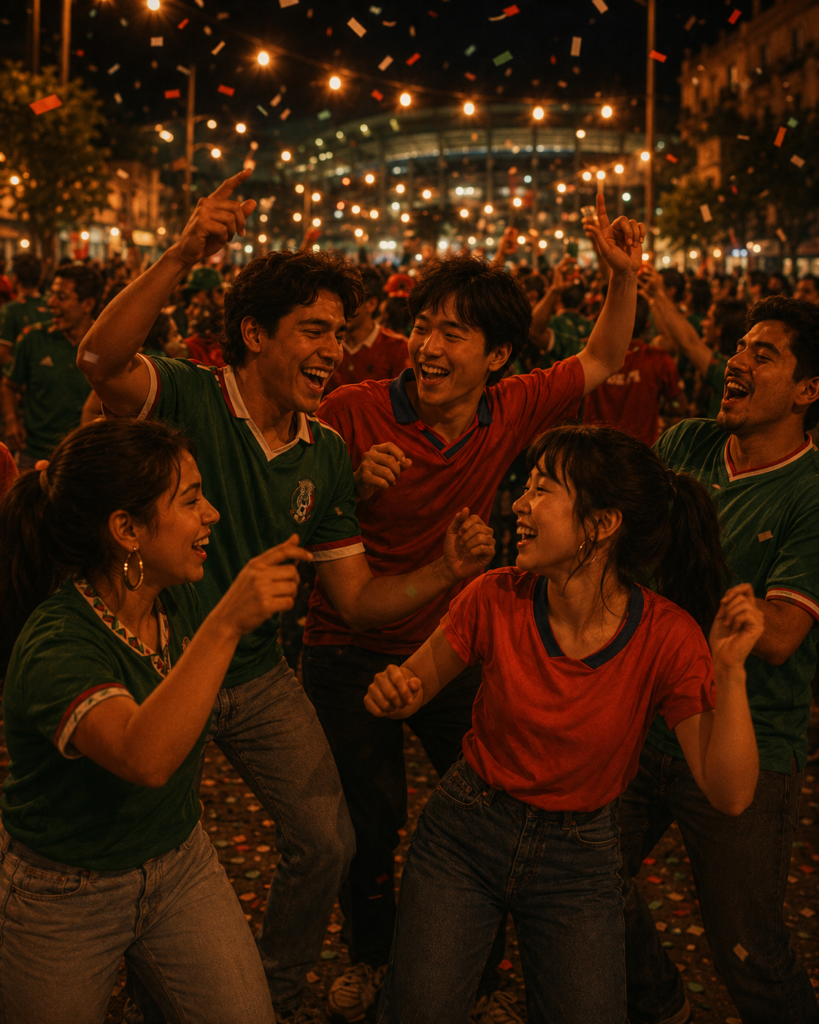
Nobody filmed that for the views. Nobody hung those flags for the credit. That’s the difference. Performative support needs an audience. This didn’t.
These teams qualified. Every one of them earned their place on that field through years of work, nobody handed it to them. And these fans, ours included, showed up to honor that the way fans do everywhere, loud, generous, a little ridiculous, completely sincere.
That’s the part of this tournament that breaks my heart a little, watching how good we are at welcoming each other when nobody with a badge is standing in the way.
It makes the people who do put up walls even harder to forgive. Including the ones I used to call friends.
What I Lost Over Shakira
A few years back I lost a friend over Shakira.
She performed at the Super Bowl halftime show. It was electric. And somewhere in the conversation after, this person said it was fine for migrant children to be in cages because their parents broke the law.
I sat with that for about thirty seconds.
And then I thought about how he was with his own kid. It was one of the things I actually admired about him, how fiercely he loved that child, how he would burn the world down before he let anything happen to him. And somehow that same fierce love didn’t stretch far enough to cover someone else’s child in a cage.
I thought about every parent who walked through a desert, crossed a river, left everything behind not because they were criminals but because they were parents. Because they would do anything. Anything. To give their child a chance at something better.
And I cut him off.
Not in anger. In clarity.
Because if you stand with me, you stand with my values. And my values do not have a carve out for children in cages.
What Is Actually Happening
The same systems deciding who gets a welcome and who gets a checkpoint during the World Cup are running every single day the cameras aren’t on.
Right now, while people are waving flags and singing along to Dai Dai and losing their minds over their favorite teams, I’m sitting on my couch with Oliver asleep against my leg, scrolling, and this is also happening.
More than 3,800 children have been detained since January 2025. Hundreds of them held past the legal limit, some for months. Babies. Toddlers. A fourteen year old describing his little brother crying from 7pm to 9pm, outside the room, saying he didn’t want to go back in. Saying he wanted to be free.
At least 32 people died in ICE custody last year. This year is already on track to be worse.
Facilities with no showers. No adequate food. Extreme temperatures. Medical care denied. Oversight agencies dismantled. Members of Congress blocked from entering detention centers to see for themselves.
This is not a political opinion.
Human Rights Watch, the American Immigration Council, KFF, the Inter-American Commission on Human Rights, and Senator Jon Ossoff, whose own investigation has received over a thousand credible reports of abuse, have all documented this.
These are not my numbers. I’m just the one saying them out loud.
The Flag Costs Nothing
So when I see the content creators waving flags for Nigeria, for Senegal, for Iran, for Somalia, for Mexico, for every country whose own people got turned away at our airports this summer, crying over goals and posting highlight reels and wearing colors for ninety minutes, and then going completely silent when those same countries’ people are being turned away at the door, detained, deported, caged, I think about a road in Texas and how easy it was to mistake a filter for a routine.
Because the people are in those facilities. The people got turned away at Miami. The people had dogs brought in to inspect them at the airport. The people are the ones the US decided don’t belong here, on the same roads where my own family got stopped for simply existing.
The flag is easy. The flag costs nothing.
Standing with the people costs something.
And here’s what I know. What I have always known. What that little girl in the backseat figured out when she finally grew up and understood what those stops were really about.
There is a cost to not standing up too.
You just don’t always feel it right away. It accumulates. In who you become when nobody is watching. In what you can live with. In what you taught yourself was okay to ignore.
I think about Mama Lidia’s house sometimes. How we just went. No occasion needed. How crossing that line was never the hard part for us.
I wonder what the flag actually means to the people waving it the loudest.
Dai Dai. Let’s go.